Click, Pay, Destroy: The Counterfeit Parts Flood That's Wrecking Real Builds
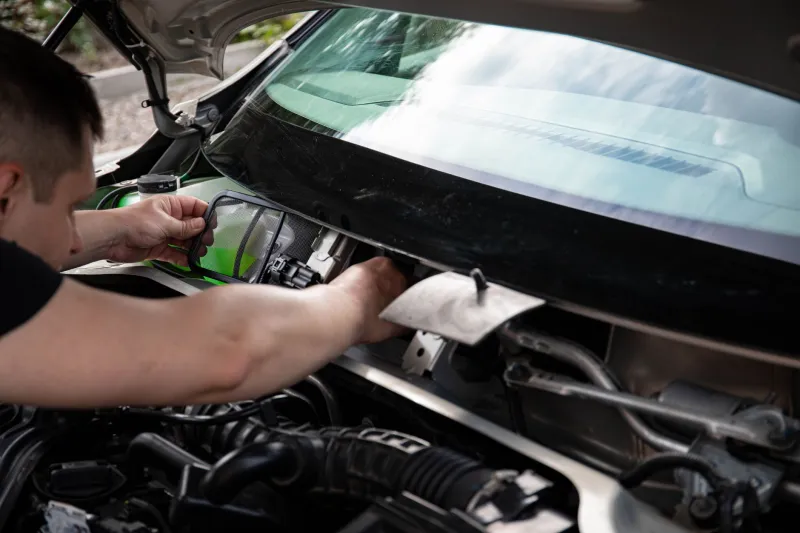
Marcus had been building his 2003 Mustang GT for three years. Every dollar counted. So when he found a fuel pump assembly listed at $38 on a third-party Amazon storefront—a part that normally runs closer to $120 from a reputable brand—he figured he'd caught a deal. Six weeks later, his engine was running rough, his fuel trims were all over the place, and the pump had already started failing. The part he pulled out didn't even have the correct internal geometry for his application. It was junk dressed up in a familiar-looking box.
Marcus isn't alone. Across the country, builders and daily drivers are getting burned by counterfeit and substandard automotive components flooding the most convenient shopping platforms on the internet. It's not a niche problem. It's an epidemic, and it's costing the enthusiast community serious money.
The Pipeline Nobody Talks About
Here's how it works. Overseas manufacturers—primarily operating out of China, though the network spans multiple countries—produce components that mimic the appearance of name-brand parts. We're talking about fuel pumps, mass airflow sensors, oxygen sensors, fuel injectors, ignition coils, and more. These parts often look identical to the real thing right down to the logo embossing on the housing. Some come in counterfeit branded packaging. Others arrive in generic white boxes but get listed online under legitimate brand names.
Third-party sellers on Amazon and eBay create storefronts with generic names, flood listings with fake reviews, price aggressively, and move product fast before complaints accumulate. When a storefront gets flagged or shut down, the same operation relaunches under a different name within days. The platforms themselves have been slow to act, largely because these sellers generate revenue just like legitimate ones do.
The Federal Trade Commission has documented the problem. Customs and Border Protection seizes counterfeit auto parts regularly. And yet the listings keep appearing. The enforcement side simply can't keep pace with the volume.
What Fake Parts Actually Do to Your Engine
The damage isn't always immediate, which makes counterfeit parts particularly insidious. A fake fuel pump might deliver inconsistent pressure—enough to start the car and drive it for a few weeks before the symptoms start showing. By then, you've already dismissed the part as a possible cause. You're chasing ghosts on your OBD scanner while the real culprit is sitting right in your tank.
Fake oxygen sensors can push your ECU into incorrect fuel trim corrections, leading to rich or lean conditions that cause carbon buildup, misfires, or even catalytic converter damage. Counterfeit ignition coils can produce inconsistent spark events. Knockoff injectors can stick open, dumping raw fuel into cylinders and washing down cylinder walls—destroying ring seal and scoring bores.
In performance applications, the consequences are amplified. A builder running a boosted setup depends on precise fuel delivery. A pump that can't maintain adequate pressure under load isn't just an inconvenience—it's a lean condition waiting to happen, and a lean condition under boost is a hole in a piston waiting to happen.
Derek, a tuner in the Atlanta area who works on import builds, told us he's seen at least a dozen engines in the past two years where counterfeit components were a contributing factor. "The worst part is that people don't know," he said. "They think they saved money. They have no idea they're the ones who put the time bomb in there."
How to Spot a Fake Before It Spots Your Wallet
There are tells, and once you know them, you'll never look at a parts listing the same way again.
Price is the first red flag. If a Walbro 255lph fuel pump is listing for $28 when every legitimate retailer has it at $80 or above, that's not a deal—that's a warning. Manufacturers have costs. Legitimate distributors have margins. Nobody is selling you a quality fuel pump at a 70 percent discount out of generosity.
Seller history matters enormously. On Amazon, click through to the third-party seller's storefront and look at their feedback history and how long they've been operating. Storefronts with fewer than six months of history and suspiciously perfect review scores are red flags. On eBay, look at where the item ships from and read the negative feedback carefully.
Packaging inconsistencies are common. Real brand-name parts have consistent fonts, correct part numbers, and quality printing. Counterfeits often have slightly off colors, blurry logos, or missing information on the box. If you can, compare the packaging side-by-side with a known-good version before installation.
Weight and finish quality can give it away. Legitimate fuel pumps have a certain heft. Counterfeit versions often use cheaper materials that feel noticeably lighter. Plastic components may have flash lines, rough parting edges, or thin walls that a genuine part wouldn't have.
Buy direct or from known distributors. RockAuto, Summit Racing, JEGS, and manufacturer-direct websites are not infallible, but they're exponentially safer than random Amazon storefronts. If you're buying on Amazon, use "Ships from and sold by Amazon" as a filter and verify the brand is enrolled in Amazon's Brand Registry.
The Platforms Have a Responsibility They're Not Meeting
Let's be direct about this: Amazon and eBay profit from counterfeit sellers. Every transaction that processes through their systems earns them a fee. The incentive structure doesn't naturally push them toward aggressive enforcement—it pushes them toward volume.
Both platforms have programs designed to address counterfeiting. Amazon's Project Zero and Transparency program allow brands to proactively remove counterfeits, but enrollment requires brands to actively participate. Smaller aftermarket brands often lack the resources to monitor and respond at the scale required. eBay's Verified Rights Owner program operates similarly.
The result is a game of whack-a-mole where legitimate brands and platform abuse teams are perpetually behind the curve. Enthusiasts absorb the losses.
Some brands have started adding authentication features—QR codes, holographic stickers, serialized packaging—but counterfeiters are adapting to replicate those too. It's an arms race, and the consumer is the one caught in the middle.
Your Survival Guide for Buying Parts Online
The internet isn't going away, and neither is the convenience of online parts shopping. The goal isn't to avoid it—it's to shop smarter.
Always cross-reference prices across multiple trusted retailers before buying. If one listing is dramatically cheaper than everyone else, treat it as suspicious until proven otherwise. Use manufacturer part number lookups to verify compatibility before trusting a generic listing. When in doubt, call the manufacturer directly and ask if the seller you're considering is an authorized distributor.
Join forums and community groups specific to your platform or build. The Mustang forums, the Honda-Tech boards, the LS swap communities—these places accumulate institutional knowledge about bad sellers fast. If a storefront is burning people, someone has already posted about it.
Document everything. Photograph parts when they arrive. Keep receipts. If something fails prematurely, report it to the platform and to the brand being counterfeited. It won't always result in a refund, but the documentation helps build cases against repeat offenders.
Your build deserves real parts. Don't let a $30 discount turn into a $3,000 engine job.