Wrenches and Wi-Fi: How a New Wave of Garage Tuners Built Empires from Nothing but a Camera and a Code Scanner
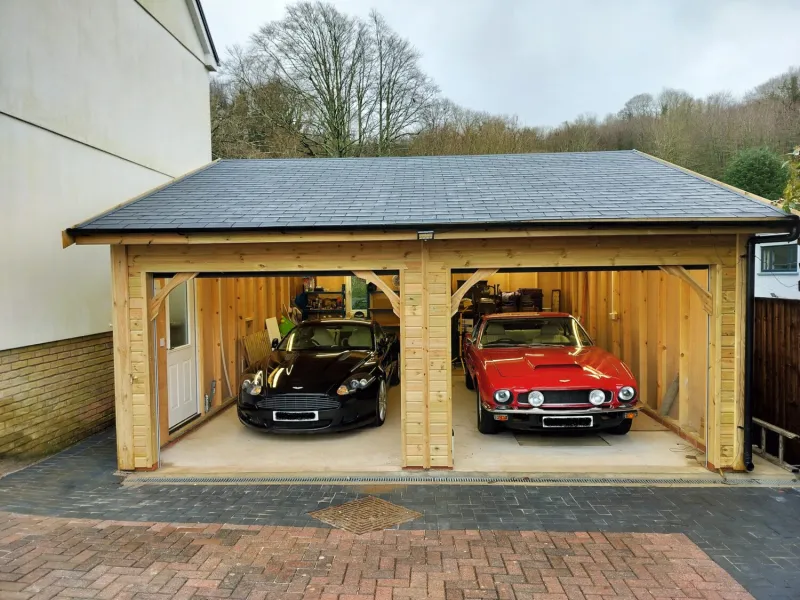
Photo: garage mechanic laptop tuning car engine modification workshop, via warwickbuildings.co.uk
Five years ago, if you wanted a serious tune for your built WRX, you called a shop with a dyno, made an appointment, drove there, and paid whatever they asked. The knowledge was locked behind geography and reputation. The guys who knew how to squeeze real power out of a platform were clustered in specific cities, and if you didn't live near one of them, you were either shipping your car or settling for a mail-order map that may or may not have been written with your specific setup in mind.
That world is dissolving fast. And what's replacing it is something the traditional aftermarket industry is still trying to figure out how to respond to.
The Camera as a Credential
The formula sounds almost too simple when you lay it out: document your builds, explain your process, be honest about your failures, and post consistently. Do that long enough on the right platforms, and the audience comes. The audience becomes a community. The community becomes customers. The customers become a business.
But executing that formula takes real skill on both ends — the mechanical side and the content side — and the people doing it well have figured out how to speak to both the hardcore builder and the curious beginner at the same time.
Take someone like Derek Hollis, a 29-year-old from Columbus, Ohio, who started filming his EJ-swapped Forester build in his parents' driveway in 2020. His first video got 400 views. His channel now sits north of 280,000 subscribers, and he's been making his full-time living from a combination of YouTube ad revenue, Patreon memberships, and remote tuning consulting for the past two years. "I never set out to be a content creator," he told us over the phone while dyno-logging a customer's file in the background. "I just wanted to document what I was doing so I could look back at it. The audience kind of showed up on its own."
Stories like Derek's aren't rare anymore. They're becoming the norm.
Discord: The Backroom That Scaled
If YouTube is where these builders build their audience, Discord is where the real work happens. The platform has become the backbone of a sprawling underground economy of automotive knowledge — one that operates almost entirely outside traditional industry structures.
Private Discord servers for specific platforms (your Evo Xs, your S-chassis builds, your LS-swapped everything) have become incredibly dense repositories of real-world data. Boost logs, knock events, injector duty cycle charts, fuel trim data from dozens of different setups — all of it shared freely between members who trust each other because they've been in the trenches together.
The more sophisticated servers have tiered memberships. Free access gets you the general channels and the build threads. Pay a monthly fee and you get access to a private channel where the server owner — usually the tuner or builder who built the audience — does live Q&A, reviews your datalogs, or walks you through a tune file. It's essentially a subscription-based mentorship model that didn't exist five years ago.
"The old way was that knowledge was hoarded," says Alicia Moreno, who runs a 4,200-member Discord focused on turbocharged Honda builds and sells a proprietary base map package for K-series swaps. "Shops didn't want to teach you because you were their customer. Now the model is flipped. The more I teach, the more valuable I become. Sharing knowledge is literally the business model."
TikTok and the Thirty-Second Education
YouTube owns the long-form. Discord owns the community. But TikTok has become the unexpected discovery engine for an entire generation of new enthusiasts — and the tuners who figured that out early are reaping serious rewards.
The platform's algorithm rewards specificity and confidence, which turns out to be a perfect match for someone who really knows their stuff. A 45-second clip explaining why your idle is hunting, delivered with the right pacing and on-screen text, can reach half a million people who had no idea they needed that information. The comment section becomes a funnel. The bio link goes to a YouTube channel or a Discord server or a Gumroad page selling tune files.
The cross-platform strategy is what separates the people treating this as a hobby from the ones treating it as a business. TikTok drives discovery. YouTube builds trust through long-form content. Discord creates the community that keeps people engaged and paying. And somewhere in the middle of all that, a garage mechanic in the Midwest becomes a legitimate authority figure in their corner of the aftermarket world.
What This Means for the Traditional Aftermarket
The established players are watching all of this very carefully, and their reactions range from adaptation to outright hostility.
Some shops have leaned in, partnering with content creators for sponsored builds and using their platforms to reach audiences that traditional advertising would never touch. Others are quietly threatened by the fact that a kid with a GoPro and a Tactrix cable is pulling in more monthly income than a journeyman tuner at an established shop.
Parts suppliers are the most aggressive adopters. Brands that once relied entirely on trade shows and print catalogs are now funneling significant budget into creator partnerships, because they've realized that a genuine build video featuring their product is worth more than any banner ad they've ever run.
The knowledge democratization piece is real and probably permanent. Platforms like HP Tuners, EcuFlash, and EFI Live have always been accessible to anyone willing to learn, but the learning curve was steep and the community around them was scattered. What YouTube and Discord have done is compress that learning curve dramatically by making mentorship scalable. Someone who would have spent three years figuring out Subaru ECU tuning on their own can now get there in six months by following the right channels and joining the right server.
The Culture Underneath the Business
Strippped of the monetization layer, what's actually happening here is something that car culture has always done: enthusiasts teaching enthusiasts. The difference is that the tools available now make it possible to do that at scale, across geography, and with enough economic upside that talented people can afford to do it full-time.
The garage isn't going anywhere. The wrench isn't going anywhere. What's changed is that the person holding the wrench now has a global audience, a subscription revenue stream, and a community of thousands of people who are invested in watching them succeed.
That's not a threat to car culture. That's car culture evolving exactly the way it always has — by finding new roads.