Drop It In: How Engine Swaps Became the Hottest Conversation at Every Car Meet
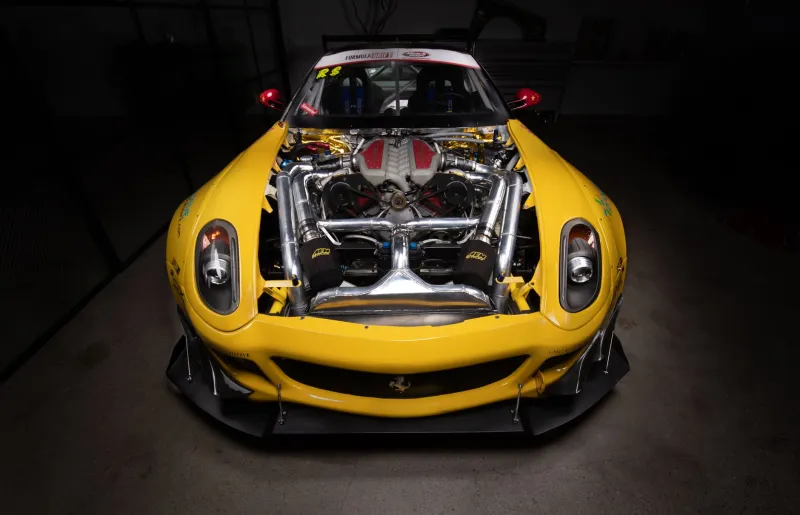
There's a moment at every good car meet — you're walking the lot, nodding at clean builds, maybe stopping to crouch down and check out some aggressive fitment — and then someone pops a hood. The crowd shifts. Phones come out. And somebody in the back asks the question that's become the new handshake of American car culture: What engine is in that?
Engine swaps aren't new. Gearheads have been transplanting motors since there were motors worth transplanting. But something has changed in the last few years. What used to be a sketchy, expensive, one-in-a-thousand kind of build has quietly become one of the most accessible paths to serious performance — and the community knowledge, junkyard economy, and online ecosystem that supports it has never been stronger.
The LS Didn't Start It, But It Sure Didn't Hurt
If you want to understand the modern swap scene, you have to start with the LS engine. General Motors' small-block V8 family has become the great equalizer of American performance. Light, compact, insanely tunable, and available for a few hundred bucks at any self-service yard in the country — the LS turned the swap from a curiosity into a culture.
Miatas with LS engines. Third-gen Camaros with LS engines. Mazda trucks, Volvo wagons, Toyota pickups — the internet is full of builds where someone asked "why not?" and then spent a weekend proving it was possible. The LS swap specifically spawned entire cottage industries: custom motor mounts, wiring harness kits, transmission adapters. Companies like Sikky and T56 Magnum have built real businesses off the premise that someone, somewhere, is always trying to wedge a GM V8 into something it was never meant to go.
But the LS is just the poster child. The real swap economy is broader and weirder and way more interesting.
The Junkyard as Parts Counter
Walk into any Pick-N-Pull on a Saturday morning and you'll find them — guys with laptops open on the trunk of their car, cross-referencing part numbers, measuring bellhousing bolt patterns, and photographing wiring diagrams before yanking a complete engine out of a totaled Accord or a flood-damaged WRX. The junkyard has become a legitimate marketplace for performance parts, and savvy builders have learned to work it like a stock exchange.
Facebook Marketplace and Craigslist have only accelerated this. A clean K-series engine pulled from a crashed Civic Si can flip for $1,200 to $2,000 depending on mileage and condition. A complete 2JZ from a wrecked Supra or Lexus IS300 can run $3,000 to $5,000 — still a fraction of what a comparable power level costs through forced induction on a factory motor with diminishing returns.
Builders have figured out the math. Buy the right donor engine, source a swap kit, and you can end up with more reliable, more powerful, and more interesting performance than anything a dealership's accessories catalog could offer — often for the same or less money.
From Hobby to Hustle
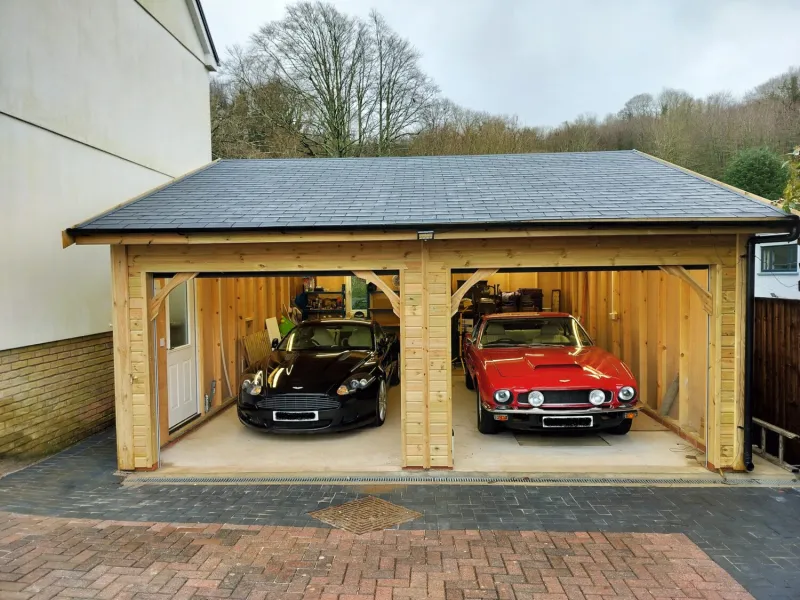
Here's where it gets genuinely interesting: a whole tier of builders has turned swap expertise into actual income. These aren't shops with lifts and alignment racks. These are people working out of two-car garages in the suburbs, charging $2,500 to $4,500 in labor to drop a motor into someone else's car and make it drive right.
Take the kind of builder you'll find in any mid-sized city — someone who started doing their own swaps out of necessity, documented it on YouTube or Instagram, and suddenly had strangers sliding into their DMs asking if they'd do the same to their car. Word spreads fast in local car scenes. A good swap builder with a reputation for clean wiring and solid tuning referrals doesn't need to advertise. The waiting list handles itself.
Some have taken it further — building swap-specific tutorial channels, selling wiring harness guides as digital products, or partnering with mount kit manufacturers to test and promote new fitments. The swap economy has a whole content layer on top of it, and it's feeding itself.
The Legal Gray Area Nobody Talks About Loudly
It would be dishonest to write about engine swaps without acknowledging the complicated legal reality that hangs over the whole scene. Emissions regulations vary dramatically by state, and swapping in an engine that doesn't match your car's original smog certification can create real problems at inspection time — or worse, attract attention from law enforcement if you're running a build that's clearly not factory.
California, unsurprisingly, has some of the strictest rules. CARB (California Air Resources Board) has specific regulations around what constitutes a legal engine swap, and many popular combinations simply don't qualify without significant additional work. Texas, Florida, and other states with lighter emissions oversight are considerably more forgiving, which is part of why the swap scene in those states is particularly active.
The community has generally developed workarounds — some cleaner than others. Some builders focus exclusively on pre-OBD2 vehicles that aren't subject to modern emissions testing. Others build dedicated track cars that never see the road. And some just roll the dice and keep a low profile. It's a conversation that happens quietly at meets, in DMs, and in private forum threads. Loudly advocating for illegal builds isn't really the culture — but acknowledging the reality is.
Why "What Came With It" Stopped Being Enough
There's a philosophical shift underneath all of this that's worth sitting with. For a long time, performance culture was built around extracting more from what you had — better intakes, upgraded turbos, ECU tunes. And that still has its place. But a growing segment of enthusiasts has decided that the factory engine isn't the starting point — it's just one option among many.
When you swap an engine, you're making a statement. You're saying the car you want and the engine you want don't have to be sold together by a manufacturer to belong together. You're treating the vehicle as a platform rather than a product. That's a fundamentally different relationship with a car, and it's one that tends to run deep.
The builders who live in this world talk about their cars differently than people who buy a tuner package at the dealer. They know every bolt, every wire, every clearance issue they had to solve. The car becomes a collaboration — between the builder, the community that helped them figure it out, and whatever mechanical soul the new engine brings with it.
The Question That Started It All
So the next time you're at a meet and someone pops a hood and a crowd gathers and someone asks what engine is in that — pay attention to the answer. It's not just trivia. It's a story about where that engine came from, what it took to make it fit, who helped figure out the wiring, and why this person decided that what came from the factory wasn't going to be enough.
That's the swap economy in a sentence. And it's just getting started.