The Crackdown Is Real: What the EPA's War on Aftermarket Parts Means for Every Builder in America
For a long time, the aftermarket performance world operated in something close to a gentleman's agreement. Manufacturers sold parts labeled "for off-road or competition use only," shops installed them with a knowing nod, and enthusiasts drove their builds to the track — or, let's be honest, everywhere else too. Everybody understood how the game worked. Then the EPA decided it was done playing along.
Over the past few years, federal regulators have escalated enforcement actions against aftermarket companies selling parts that tamper with emissions controls. The result has been a slow-motion reshaping of an industry that touches millions of American car enthusiasts. Fines have landed in the tens of millions of dollars. Products have been delisted from major retailers overnight. And shops that built their reputations on aggressive tunes are suddenly rethinking their service menus.
The question hanging over every garage, every meet, and every forum thread right now is simple: how bad does this actually get?
What the Law Actually Says — and Why It's Complicated
The Clean Air Act has always prohibited tampering with factory emissions equipment. That's not new. What's changed is the intensity of enforcement and the broadening definition of what counts as a violation. The EPA's 2021 proposed rule targeting "defeat devices" — aftermarket parts designed to bypass or disable emissions controls — sent a clear signal that the agency was no longer content to look the other way.
Legal experts who work in the automotive space say the language creates genuine gray areas. "The statute has always been there," says one attorney who works with several aftermarket manufacturers and asked not to be named due to ongoing client matters. "What's shifted is the agency's appetite for actually using it. A lot of companies built entire business models around enforcement being lax. That calculus changed."
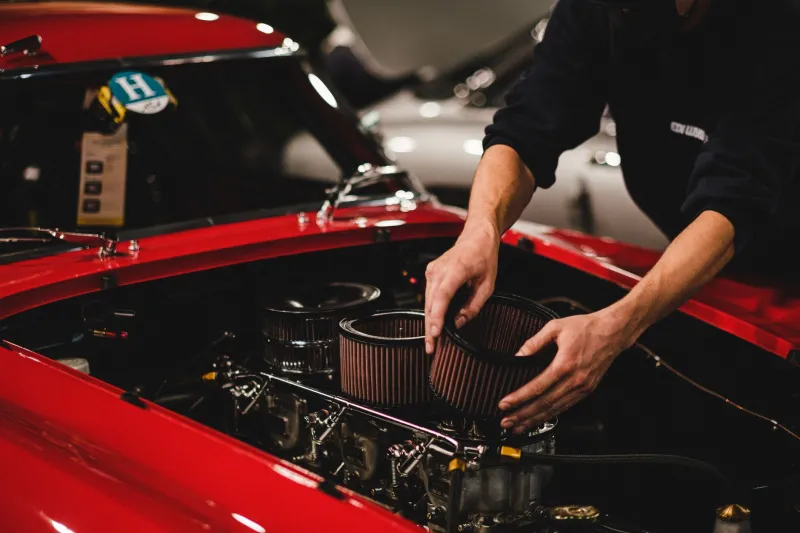
The practical fallout has been significant. Catalytic converter delete pipes, certain cold-air intakes that remove emissions sensors, and ECU tunes that modify fuel mapping tied to emissions controls have all landed in the crosshairs. Some products got pulled voluntarily. Others got yanked from platforms like Amazon and even specialty retailers after pressure campaigns. A handful of manufacturers faced direct legal action.
Shops on the Front Lines
Talk to enough shop owners and you start hearing a consistent story: the fear of liability is already changing behavior, even among people who haven't been touched directly by enforcement.
Marcus, who runs a performance shop in the Dallas-Fort Worth area and has been building cars for over fifteen years, says the shift has been gradual but undeniable. "Used to be, a customer came in wanting a full exhaust delete and a remap, you just did the work," he says. "Now I'm having conversations I never used to have. What year is the car? Is it registered in a state with its own emissions program? Is this thing ever going to see an inspection?"
For shops in states with strict emissions testing — California being the obvious example, but also New York, Colorado, and others — the math has always been harder. But the EPA's federal-level push means even builders in states with no emissions testing have to think twice. "The issue isn't just whether your state tests the car," Marcus explains. "It's whether the parts themselves are legal to sell and install federally. Those are two different questions."
Some shops have quietly stopped offering certain services. Others have shifted toward track-only builds with proper documentation, creating paper trails designed to hold up if questions ever arise. A few have moved parts of their operation underground — cash jobs, no receipts, nothing in writing. That last group, most people in the industry will tell you, is playing a genuinely dangerous game.
The Underground Economy
Here's the uncomfortable truth the industry doesn't love to talk about: enforcement pressure doesn't eliminate demand. It just pushes it somewhere less visible.
Online communities have adapted quickly. Discord servers and private forums now circulate information about which parts are still available through gray-market channels, which overseas suppliers ship directly to buyers, and how to navigate the paperwork around track-use exemptions. The knowledge is out there. Finding it just requires knowing where to look.
Tuners who operate in this space describe a kind of parallel market that runs alongside the legitimate aftermarket. "The parts still exist," says one ECU calibrator who works primarily with import enthusiasts and declined to give his name. "They're just not on the shelf at your local speed shop anymore. Guys are importing directly, sourcing from Canada or Europe, getting creative. Where there's demand, there's always a way."
Whether that creativity constitutes a long-term solution or just a delay of consequences is another matter entirely. The EPA has demonstrated it can trace supply chains when motivated. And the penalties for manufacturers and distributors caught in violation are serious enough to make even risk-tolerant operators nervous.
What the Industry Is Actually Doing About It
Not everyone is going underground. The legitimate side of the aftermarket has been working — with varying degrees of success — to carve out legal space for performance modification.
SEMA, the trade group that represents the specialty equipment market, has been lobbying hard for the RPM Act (Recognizing the Protection of Motorsports Act), a piece of federal legislation that would explicitly protect the sale and use of emissions-defeating parts for dedicated racing vehicles. The bill has passed the House in previous sessions but stalled in the Senate. Supporters are optimistic. Critics argue the exemption would be impossible to enforce in practice.
Meanwhile, some manufacturers have invested heavily in getting CARB Executive Orders — California Air Resources Board certifications that, if obtained, essentially provide a legal green light for a part in the most restrictive regulatory environment in the country. It's expensive and time-consuming, but it creates a defensible product. "If it's CARB legal, you're pretty much covered everywhere," says one intake manufacturer who went through the certification process. "The problem is the cost to get there filters out a lot of smaller players."
That filtering effect might be one of the more lasting consequences of the current crackdown. Bigger companies with resources to navigate compliance may survive and even thrive. Smaller builders and boutique manufacturers — the ones who have historically driven some of the most creative innovation in the aftermarket — face a much harder road.
Where This Leaves the Enthusiast
For the average person who just wants to build something fast and drive it hard, the landscape is genuinely more complicated than it was five years ago. Parts that used to be a click away are harder to find. Shops that used to handle anything now have boundaries. And the legal risk, while still largely falling on manufacturers and installers rather than end users, creates a general climate of uncertainty that takes some of the fun out of the hobby.
But the community has never been short on resourcefulness. Builders are finding compliant ways to make real power. Track-focused builds with proper documentation are becoming more common. And the push toward cleaner performance — high-efficiency turbos, methanol injection, alternative fuels — is quietly producing impressive results without necessarily triggering regulatory scrutiny.
The culture isn't going anywhere. It's just learning to operate in a world where the rules are being enforced for real. Whether that produces innovation or just frustration probably depends on who you ask — and which parking lot you're standing in.