Pick, Pull, Prosper: A Realist's Guide to Winning the Junkyard Lottery
Photo: dave_7 from Lethbridge, Canada, CC BY-SA 2.0, via Wikimedia Commons
The first time you walk into a good pick-and-pull yard, it feels like a mistake. Rows of dead cars, shattered glass, missing doors, and mud. Then you spot it: a complete manual-swap pedal assembly in a car nobody else bothered to touch. Twenty minutes later you’re walking out with a part that would have cost four times as much on a forum, and you understand the appeal.
Junkyards are not glamorous. They are not a lifestyle brand. They are the last honest discount in car building. In 2026, with new OEM parts priced like jewelry and aftermarket quality all over the map, a self-serve yard is still one of the few places where a broke builder can win.
Why the Yard Still Matters
The economics are simple. A used intake manifold, ECU, door shell, or wiring harness can be the difference between a project that moves and one that sits. New parts are often discontinued. Reproduction parts can be junk. Marketplace sellers want top dollar for parts they pulled years ago and stored badly. The yard is different: the part is still on the car, and you can inspect it before you pay.
There’s also a sustainability angle that doesn’t get enough credit. Pulling a used part keeps it out of the crusher and keeps a car on the road. For the grassroots scene, that matters. Not everyone can afford a new crate engine or a carbon-fiber everything. Some of the best builds in America started with a yard receipt and a Saturday morning.
Before You Go: Build a Hit List
Don’t just show up and wander. Check the yard’s inventory online if they post it. Most large chains do. Search by make, model, year, and row. Cross-reference part numbers and interchange info on owner forums. If you’re hunting a specific transmission, know which years and trim levels used it. If you need a harness, know whether you need an automatic or manual body harness, and whether the car had ABS, traction control, or a different emissions package.
Bring more tools than you think you need: socket set, extensions, breaker bar, penetrating oil, wire cutters, trim tools, gloves, safety glasses, and a bag for bolts. Bring a friend if you can. Some yards don’t allow certain power tools, so check the rules before you pack a battery impact. Wear boots. Bring water. The rows are longer than they look on the map.
How to Work a Row Without Wasting a Day
Arrive early. The good stuff goes first, especially rare trim pieces and clean body panels. Grab a map at the gate and mark the cars on your list. Walk the row once without pulling anything. Inspect the part in place. Look for cracks, stripped threads, corrosion, and signs of previous half-finished repairs. A part that looks good in photos can be a paperweight in person.
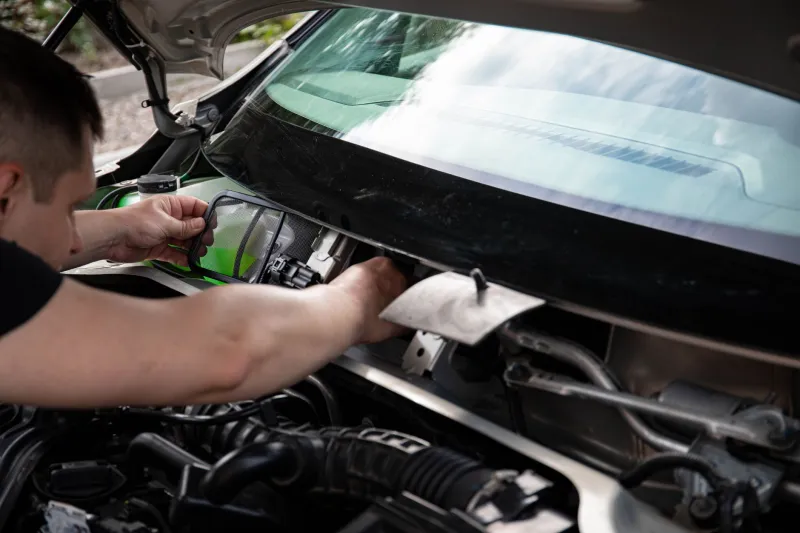
When you pull, be deliberate. Don’t cut a harness if you can unplug it. Don’t break a clip if you can release it. Don’t butcher a door to get a mirror. The next guy might need what you’re destroying, and yard etiquette is real. Keep your bolts in a labeled bag. Check the core charge and warranty policy before you pay. Some yards give a short return window; some sell as-is. Know which one you’re dealing with.
What’s Worth Hunting in 2026
The usual suspects still pay off. Older Hondas and Acuras for swap parts, manual pedals, and clean cylinder heads. GM trucks and SUVs for LS-based parts, transmissions, and cooling components. Ford Panther-platform cars for cheap V8 hardware and rear-end parts. Jeep XJs and TJs for axles, transfer cases, and body pieces that have become surprisingly hard to find. Older Volvos and BMWs for weird euro bits that cost real money new.
Don’t overlook the boring cars. A base-model sedan can donate a clean door, a rear bumper, a window regulator, or a fuel pump assembly that fits a dozen other trims. Four-cylinder economy cars are often picked clean of engines but still have intact interiors and body panels. If you’re building a daily driver, those are gold.
The Money Math
Yards are cheap, but they’re not free. Add up entry fee, part price, tools, gas, and your time. A $60 harness that needs three hours of work and a $20 entry fee is still a good deal if the alternative is $400 online. A $25 alternator with unknown mileage is not a deal if you have to do the job twice.
Buy with a plan. Don’t hoard parts because they’re cheap. Don’t pull a motor you can’t test. Don’t buy a transmission without checking the fluid and the input shaft. The yard rewards preparation and punishes impulse. The guys who win are the ones who bring a list, a multimeter, and a realistic idea of what they can carry.
The Human Side
Yards are also a social scene, in their own weird way. You’ll meet retirees who know every interchange, kids learning how to turn a wrench, and builders hunting the same rare part you are. Ask questions. Share a tool. Don’t be the guy who hides a part under another car so nobody else gets it. The yard is a lottery, but it’s also a community. Act like it.
That’s the real reason pick-and-pull lots keep grassroots car building alive. They’re affordable, they’re honest, and they force you to learn how parts actually fit together. In a hobby that keeps getting more expensive, that’s worth protecting.