Priced Out of the Pits: How Legal Drift Events Became a Rich Kid's Hobby and What the Underground Is Doing About It
There's a version of the drift dream that lives rent-free in a lot of heads. You show up to a track, tires loaded in the trunk, car smelling like burnt rubber and ambition. You sign in, grid up, and spend the day sideways. Maybe you learn something. Maybe you break something. Either way, you go home with that particular kind of tired that only comes from doing exactly what you love.
For a lot of American enthusiasts right now, that dream is running into a very concrete wall — and that wall has a dollar sign on it.
The Numbers Don't Lie
Let's just say it plainly: track days are expensive. Not "skip the fancy coffee" expensive. We're talking real money. Depending on where you live and which event you're looking at, a single-day sanctioned drift event can run anywhere from $250 to $600 just to participate. That's before you touch your car prep budget, your tire bill, corner worker fees, or the mandatory insurance waivers some facilities now require you to purchase at the gate.
At certain HPDE-adjacent drift events in the Southeast and Pacific Northwest, full weekend packages — the kind with overnight camping, multiple session rotations, and a paddock spot — have crept past the $900 mark. For a lot of guys running beat-up Nissan 240SXs and third-gen Camaros on a mechanic's salary, that's not an afternoon hobby. That's a mortgage payment decision.
And the costs don't stop at the gate. Track facilities have their own overhead — insurance premiums, liability coverage, track maintenance, safety crews, and the ever-present threat of a lawsuit if anything goes sideways in the wrong way. Organizers aren't necessarily gouging anyone. The economics of running a legal, sanctioned event at a proper facility are genuinely brutal. But the result is the same: the barrier to entry keeps climbing, and the people getting squeezed out are almost always the ones who've been in the culture the longest.
Who's Left Standing in Line
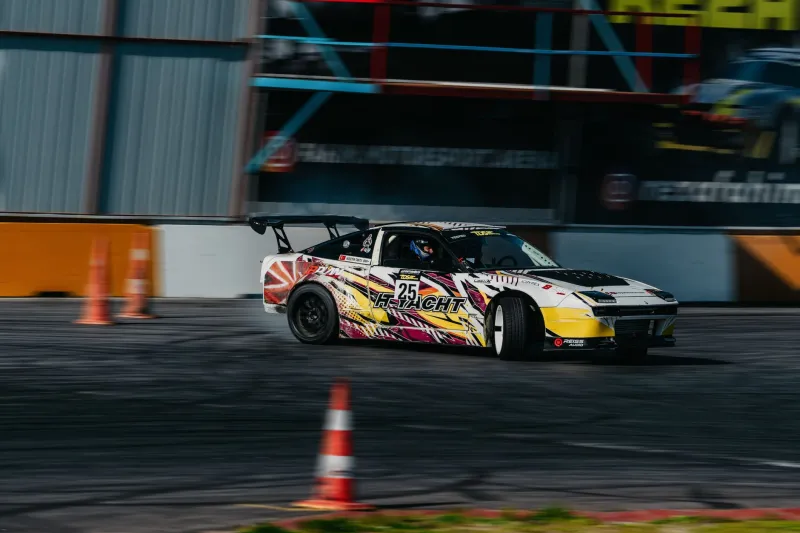
Spend enough time at organized drift events and you start noticing a shift in the paddock. The beat-up project cars are still there, sure, but they're increasingly outnumbered by purpose-built machines with proper cage work, matching liveries, and trailers that cost more than most people's first cars. The vibe has changed. It's more polished, more branded, more Instagram-ready — and a little less like the wild, chaotic energy that made drift culture magnetic in the first place.
That's not a knock on anyone who's leveled up their build or their budget. But there's something worth paying attention to when the entry cost to a hobby starts filtering out everyone who doesn't have disposable income to burn. Culture doesn't survive that kind of attrition for long before it starts to feel hollow.
A lot of younger drivers — the ones who got hooked watching FD streams and YouTube edits at 2 a.m. — are finding the door half-closed by the time they show up with a car and a dream.
The Underground Pushes Back
Here's where it gets interesting. Because for every sanctioned event pricing people out, there's a parallel circuit operating quietly in the margins — and it's thriving.
Across the country, loosely organized crews are renting private industrial properties, unused airport taxiways, decommissioned racetracks, and rural farmland for single-night events that charge $40 to $80 a head. No official sanctioning body. No liability waiver packet. Just a flat lot, some safety cones, a generator, and a bunch of people who really want to drive sideways.
These events operate in a legal gray zone that varies wildly by state, county, and whoever owns the property. Some organizers have worked out legitimate short-term rental agreements with landowners who are happy to collect a check for one weekend a month. Others are operating on handshake deals that could evaporate without notice. And some, frankly, are taking on real legal exposure — the kind that ends careers and bank accounts if something goes wrong.
But the demand is undeniable. Word-of-mouth events in places like central Texas, the Carolinas, and parts of the Midwest are regularly drawing 50 to 80 cars on a Friday night. People are driving hours for a $60 entry fee and a concrete lot with good lighting. The product isn't fancy. The product is access.
The Risk Conversation Nobody Wants to Have
Let's be honest about the other side of this. Unsanctioned events don't have corner workers. They don't have crash barriers. They don't have an EMT standing by or a fire extinguisher at every station. When something goes wrong — and eventually, something always does — the consequences can be severe, and the legal fallout can reach everyone involved.
Organizers who run these events aren't oblivious to that. The ones doing it responsibly are putting real thought into safety protocols, driver screening, and site selection. But "responsibly run underground event" is still a phrase that carries inherent contradiction. There's no governing body to enforce standards. There's no insurance backstop. There's no accountability structure beyond the organizer's own judgment.
The question isn't whether these events should exist — they're going to exist regardless, because the demand is real and the frustration is real. The question is whether the mainstream motorsports infrastructure is paying attention, and whether it's willing to find a middle path before the underground grows so large it becomes impossible to ignore.
What a Fix Might Actually Look Like
Some tracks are experimenting with lower-cost "arrive and drive" nights aimed at beginners — shorter sessions, simpler formats, stripped-down pricing. A handful of regional drift organizations have started tiered membership structures that subsidize entry costs for newer participants. These are small moves, but they signal that at least some people inside the system understand the problem.
The more interesting experiments are happening at the intersection of private property and community organizing. Crews pooling resources to lease industrial sites on long-term agreements. Grassroots nonprofits forming around motorsports access in underserved regions. Drivers-turned-organizers building relationships with local governments to legitimize what they're already doing anyway.
None of it is a clean solution. But the energy is there, and the frustration is a powerful engine.
The Culture Belongs to the People Who Build It
Drift culture didn't come from money. It came from parking lots and mountain roads and people who loved cars more than they loved their tire budgets. The soul of it has always been about skill and creativity and community — not about who can afford the cleanest setup or the most expensive track day.
If the sanctioned world keeps drifting toward exclusivity, the underground will keep filling the gap. That's not a threat. It's just how culture works. But it would be a shame to let a split happen that didn't have to.
The track should be for everyone who loves to drive. Figuring out how to make that real — legally, safely, sustainably — is the work that actually matters right now.