Grease and Gray Hair: The Garage Mentors Saving Car Culture One Kid at a Time
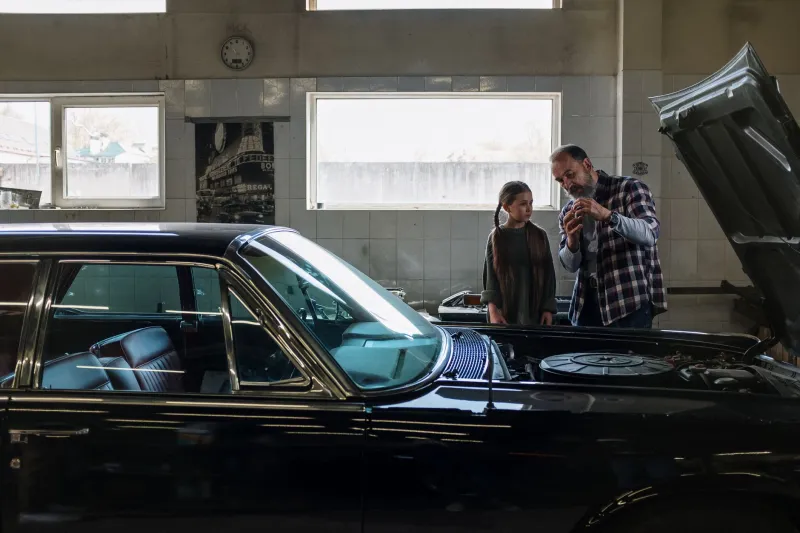
Ron Szczepanski is 67 years old. He's been working on cars since he was twelve, taught himself to rebuild a small-block Chevy in his parents' driveway in suburban Cleveland, and has owned somewhere north of forty vehicles across his lifetime. He doesn't have a YouTube channel. He doesn't post builds on Instagram. He just has a two-car garage in Parma, Ohio, packed with tools he's collected over five decades, and a standing offer to any neighbor kid who wants to learn something.
Last spring, a 19-year-old named Jaylen knocked on his door. Jaylen had bought a beat-up 1996 Honda Civic for $900 and had no idea what to do with it. He'd watched videos online, but something wasn't clicking. Ron invited him in. Eight months later, Jaylen can do his own brake jobs, change his own oil, diagnose a misfire, and is halfway through rebuilding the Civic's B-series engine on a stand in the corner of Ron's garage.
"He picks things up faster than anyone I've ever shown," Ron said. "He just needed someone to slow down and actually show him, not just tell him."
This scene is playing out in garages across America, and it's more than just a feel-good story. It might be the most important thing happening in car culture right now.
A Knowledge Gap Nobody Planned For
For most of the twentieth century, mechanical knowledge passed naturally between generations. Fathers taught sons. Uncles pulled nephews into the garage. Shop class was a standard feature of American high school education. You grew up around cars, and you absorbed something just by proximity.
That pipeline has been leaking for thirty years and is now close to broken. Shop programs got defunded as schools pivoted toward college prep. Families moved to apartments where there's no garage to work in. Modern cars got complicated enough that the entry point for DIY work moved up significantly. And the cultural moment shifted—the generation that came of age in the 2000s and early 2010s was told that trades were a fallback, not a choice.
The result is a generation of enthusiasts who feel the pull of car culture intensely but lack the foundational skills that used to be assumed. They know what they want their cars to look like. They know the culture. They follow the builds. But they've never done a valve adjustment or read a torque spec or bled their own brakes.
That's not a moral failing. It's a structural gap. And the people who can fill it are getting older every year.
Why the Boomers Are Showing Up
Talk to the older enthusiasts who are doing this mentorship work and you'll hear a consistent thread: they don't want what they know to disappear.
Gary Whitmore is 71, a retired machinist from outside Tulsa, Oklahoma, who spent his career working on industrial equipment and his weekends building muscle cars. He started hosting informal Saturday morning sessions in his garage about two years ago after his son mentioned that several of his younger friends wanted to learn but didn't know where to start. Now Gary has a rotating group of six to eight young people who show up most weekends.
"I'm not trying to make mechanics out of anybody," Gary said. "I just think people should understand what's under the hood of the thing they depend on every day. And honestly—" he paused and laughed— "I like the company."
That second part matters. The mentorship isn't purely altruistic. It's also social. Older enthusiasts who've lost their wrenching partners to retirement, health problems, or relocation find genuine connection in these arrangements. The knowledge flows one direction, but the energy flows both ways.
For the younger participants, what they're gaining goes beyond skill. They're getting a relationship with a machine that most people their age simply don't have. They're learning patience, precision, and the particular satisfaction of diagnosing a problem correctly and fixing it with your own hands.
The Builds That Bridge the Gap
Some of the most powerful examples of this mentorship dynamic are happening through shared project cars—multi-generational builds where the old and the new work toward a common goal.
In Phoenix, a 68-year-old named Harold and his neighbor's 22-year-old son Antonio have spent the last year and a half restoring a 1969 Dodge Dart that Harold has owned since 1978. Harold provides the car, the tools, and the knowledge. Antonio provides the labor, the enthusiasm, and—perhaps most valuably—the fresh eyes that catch things Harold's experienced hands have stopped noticing.
"He asked me one day why I was doing a certain step in a certain order," Harold recalled. "I realized I'd been doing it that way for forty years and didn't actually know why anymore. So we looked it up together. Turned out there was a better way."
That exchange captures something essential about why these partnerships work. It's not just an elder downloading information to a novice. It's a dialogue. The younger generation brings digital fluency, access to online communities and modern tuning resources, and a willingness to question assumptions. The older generation brings hands-on pattern recognition, the kind of intuition that only comes from years of diagnosing problems without a code scanner, and an understanding of how cars actually behave as mechanical systems.
What Happens If This Doesn't Scale
The stakes here are real. Grassroots car culture has always been built on the foundation of people who can actually work on their own machines. The builds, the meets, the track days, the culture itself—all of it ultimately depends on a community of people who are mechanically engaged, not just aesthetically interested.
If the knowledge transfer doesn't happen at scale, what's left is a car culture that's increasingly about consumption rather than creation. About buying expensive builds rather than building them. About watching rather than doing. That's a version of car culture, sure. But it's a hollowed-out one.
There are organized efforts trying to address this at a larger level. Some community colleges have revitalized their automotive programs and are actively recruiting younger students. Organizations like SkillsUSA run competitions that celebrate technical automotive knowledge. A handful of car clubs have formalized mentorship components into their structure.
But the most effective version of this is still happening the way it always has—informally, in someone's garage, one conversation at a time.
How to Find Your Ron, or Be Someone's
If you're a younger enthusiast who wants this kind of connection, the path in is simpler than you think. Show up at local car meets and actually talk to people. Ask questions. Express genuine interest. Most experienced builders are thrilled when someone younger wants to learn—they just don't always know how to offer without seeming presumptuous.
If you're an older enthusiast with decades of knowledge sitting in your hands, consider making the offer explicitly. Post in your local car club. Tell your neighbors. Reach out to a community college automotive program and ask if they need volunteer mentors.
The garage is still one of the best classrooms America has ever produced. It just needs people willing to keep the doors open.