Five Seconds and Gone: How the Catalytic Converter Crisis Is Pushing Working-Class Drivers Off the Road
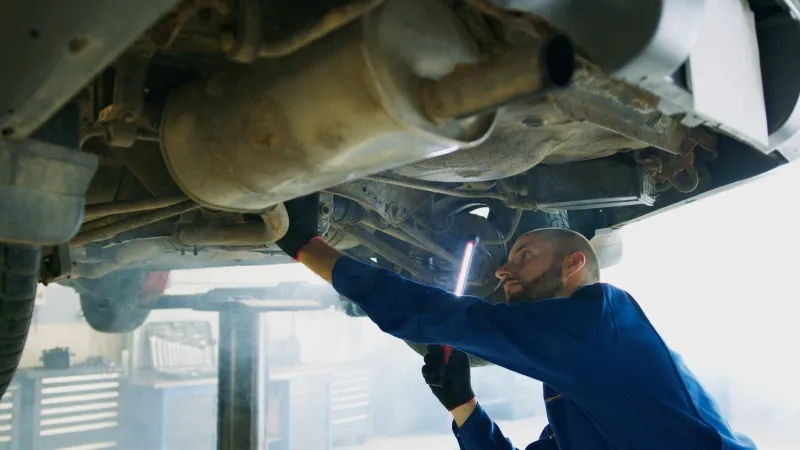
It takes less time to steal a catalytic converter than it does to read this sentence. An experienced thief with a battery-powered reciprocating saw can drop under a Toyota Prius, cut both cats, and be gone in under ninety seconds. No alarm triggers. No warning light flashes until you start the engine. You won't know until morning, when you turn the key and your car sounds like a NASCAR qualifier.
That's the moment Danielle Washington of Memphis, Tennessee experienced at 6:45 a.m. on a Tuesday last October. She had a 7:30 shift at the hospital where she works as a medical technician. Her 2007 Prius—paid off, reliable, her primary transportation—was now undrivable. The repair estimate came back at $2,400. Her insurance deductible was $1,000. She missed three days of work while waiting for parts. The total economic hit, between the repair, the missed wages, and the rental car, was close to $3,500.
"I had $600 in savings," Danielle said. "I had to borrow money from my mom. At 34 years old."
Danielle's story is not unusual. It is, at this point, almost routine—and that routineness is exactly the problem.
The Numbers Behind the Nightmare
Catalytic converter theft in the United States exploded during 2020 and hasn't fully retreated since. The National Insurance Crime Bureau reported that theft incidents increased by more than 1,000 percent between 2018 and 2022. While some states have seen modest declines following new legislation, the national numbers remain historically high.
The economics driving the theft are straightforward. Catalytic converters contain platinum, palladium, and rhodium—precious metals that spiked dramatically in price over the past decade. A single converter can yield anywhere from $50 to several hundred dollars at a scrap yard, depending on the vehicle. Prius converters, Ford F-Series trucks, and Honda Elements are among the most targeted vehicles because they carry converters with higher concentrations of these metals or because their designs allow faster access.
Thieves aren't typically working alone or opportunistically. Organized rings operate across multiple cities, with scouts identifying target-rich parking areas, theft crews running routes at night, and fencing operations that move material through a chain of metal recyclers—sometimes crossing state lines to exploit varying documentation requirements.
Who Gets Hurt Most
Here's the thing about catalytic converter theft that doesn't get said loudly enough: it is not a crime that distributes its damage equally.
Wealthy car owners have comprehensive insurance with low deductibles, vehicles under manufacturer warranty, or the financial cushion to absorb a repair without crisis. They're inconvenienced. Working-class and lower-income vehicle owners—people who depend on their cars to get to work, who are driving older vehicles because that's what they can afford, who may be uninsured or underinsured—face a genuinely destabilizing blow.
The most-targeted vehicles are disproportionately those driven by working people. The Prius is popular among rideshare and delivery drivers. The Honda Element is a budget workhorse. Older Ford trucks are the backbone of the trades. When thieves hit these vehicles, they're hitting people who cannot easily absorb the loss.
The insurance system compounds the injury. Many owners of older vehicles carry liability-only coverage—comprehensive insurance on a $6,000 car costs money that doesn't always make sense to spend. Without comprehensive, there's no claim to file. You're simply out the repair cost, whatever it is.
Even with comprehensive coverage, the process can be brutal. Claim filing, adjuster delays, parts shortages (catalytic converter replacement parts have faced significant supply chain disruptions), and rental car coverage limits can stretch what should be a one-week repair into a month-long ordeal. During that time, people miss work. They borrow money. Some just can't fix the car at all, and a vehicle becomes a lawn ornament.
The Recycling Loophole That Keeps the Market Alive
For the theft economy to function, stolen converters need to move through legitimate-looking channels. That's where metal recyclers come in.
Federal law requires scrap metal dealers to collect identifying information from sellers, but enforcement is inconsistent and the rules vary significantly by state. In states with weaker documentation requirements, it's relatively easy to walk in with a bag of converters and walk out with cash. Some operations ask no questions at all.
A handful of states have passed stronger legislation in recent years—requiring sellers to provide vehicle title or other proof of ownership, prohibiting cash payments above certain thresholds, or requiring recyclers to photograph sellers and hold materials for a waiting period before processing. Early data from states that implemented these laws shows measurable reductions in theft rates.
But the patchwork nature of state-by-state regulation means that organized rings simply move their operations to jurisdictions with weaker laws. It's regulatory arbitrage, and it works.
What Manufacturers Could Do—and Haven't
This is where the conversation gets uncomfortable.
The catalytic converter theft problem exists in part because converters are expensive, accessible, and contain materials that hold serious resale value. Manufacturers have known about the theft problem for years. Solutions exist—etching serial numbers into converters, designing them to be harder to access, using anti-theft shields as standard equipment—but adoption has been slow and largely voluntary.
Some manufacturers have started offering VIN-etching programs or partnering with aftermarket shield manufacturers. Toyota has offered discounted protective shields for Prius owners in high-theft areas. These are positive steps. They are also inadequate responses to a systemic problem.
The argument that manufacturers should bear more responsibility for designing theft-resistant systems isn't radical. Automakers responded to airbag mandates, side-impact standards, and backup camera requirements when regulations forced the issue. Without regulatory pressure, the financial incentive to solve a problem that doesn't directly cost them anything remains low.
Senators and representatives in several states have introduced legislation targeting the theft pipeline. Federal legislation has been proposed multiple times. Progress has been slow.
Protecting Yourself Right Now
While systemic solutions remain elusive, there are practical steps that genuinely reduce your risk.
Catalytic converter protection plates are the most effective physical deterrent available. Products from companies like Cat Security, Miller Cat, and Catloc bolt onto the undercarriage and make converter removal dramatically slower and louder. Most thieves will move to an easier target rather than spend four minutes grinding through a shield. These products typically run $150 to $400 depending on your vehicle.
Parking strategy matters more than most people realize. Parking in well-lit areas, close to building entrances, in view of cameras, or in enclosed garages reduces opportunity significantly. Thieves prefer darkness and isolation.
VIN etching your converter doesn't prevent theft, but it makes the converter harder to fence and aids in recovery. Some police departments offer free etching events. Aftermarket etching kits are inexpensive.
Motion-sensitive alarms that trigger on vibration rather than just door contact can provide earlier warning. Some owners add secondary sensors specifically calibrated for the undercarriage.
Community awareness is underrated. Neighborhood watch groups, apartment complex residents, and business owners who share parking areas can coordinate to report suspicious activity. Organized theft operations depend on not being noticed.
Danielle eventually got her Prius fixed. She's since installed a protection plate and moved to a parking spot closer to her building's security camera. She's also been helping her neighbors understand what to look for.
"I'm not going to let it happen again," she said. "But I shouldn't have to be the one figuring all this out. Somebody with actual power should have fixed this already."
She's right. Until they do, the rest of us have to look out for each other.