The Slow Lane Special: Five Popular Mods That Cost You Lap Time
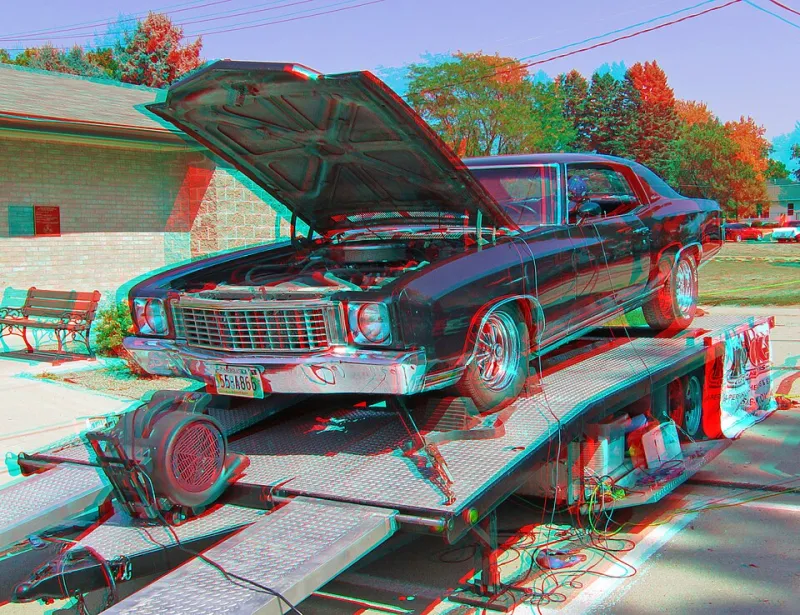
Photo: Jim Frost from Sioux City, USA, CC BY 2.0, via Wikimedia Commons
The aftermarket is very good at selling possibility. A shiny intake tube, a giant wing, a plug-in chip that promises “up to 35 horsepower.” The box looks fast. The product photo looks fast. The car, unfortunately, does not always get faster.
This is not an attack on modifying cars. It’s an argument for modifying them with a plan. Some of the most popular upgrades in the scene are net negatives—especially on a mostly stock car. Here are five that regularly cost real lap time, plus what to spend on instead.
1. The Open-Cone Intake Without a Tune
An open filter in the engine bay sounds like horsepower. It makes a great induction noise, and on some turbo cars it adds a little whoosh. On a naturally aspirated daily, it often does very little at peak and can lose midrange torque after heat soak. The factory airbox is usually a cold-air box. The aftermarket cone sitting next to the exhaust manifold is not.
Dyno sheets from back-to-back tests tell the same story: a couple of peak horsepower gained on the first pull, then a fade as intake air temperatures climb. If the MAF housing is a different size and the tune hasn’t been scaled, the car can run lean or throw codes. That’s not a performance upgrade. That’s a liability.
Spend instead on a proper tune, a sealed cold-air box, or a drop-in filter with a factory-style airbox. If you’re chasing real power, the tune is where the money goes.
2. The Too-Big Cat-Back on a Naturally Aspirated Engine
Bigger exhaust sounds serious. On a turbo car, a larger downpipe and exhaust can unlock real gains. On a naturally aspirated engine, going too large can hurt exhaust scavenging and kill low-end torque. The car gets louder, drones on the highway, and feels softer out of corners.
Track logic matters here. If you’re losing midrange, you’re losing the pull that gets you off a corner. A 3-inch system on a stock 2.0-liter isn’t a performance upgrade; it’s a noise upgrade. The weight of extra piping and a heavier muffler doesn’t help either.
Spend instead on a well-designed header, a high-flow catalytic converter if it’s legal in your area, and a tune that accounts for the change. Match the exhaust to the engine, not to the sound clip you liked online.
3. Heavy “Big Brake” Bling and 20-Inch Wheels
Big brakes look incredible. They also add unsprung mass and rotational inertia, especially when the kit is chosen for looks rather than thermal capacity. Add a set of heavy 20-inch wheels and tires, and you’ve built a car that accelerates slower, rides worse, and costs more to run.
On a street car, the factory brakes with good pads, fresh fluid, stainless lines, and proper cooling are often enough. On track, a well-matched BBK can be worth it—but only if the wheels and tires are sized for the job. A massive rotor behind a heavy wheel is not automatically faster. Sometimes it’s just heavier.
Spend instead on tires, brake pads, fluid, and lightweight wheels in a sensible diameter. Tires are the biggest single lap-time upgrade most drivers can buy.
4. The Rear Wing Bolted to a Stock Body
A wing adds downforce—if it’s designed for the car, mounted at the right angle, and paired with a front splitter that balances the aero. A generic wing bolted to a stock trunk lid usually adds drag and rear lift at speed, not grip. It can also upset the car’s balance in fast corners.
Aero is not cosmetic. It’s a system. Without data, you’re guessing. And guessing with aero can make a car nervous at exactly the speed where you need confidence.
Spend instead on a proven aero package, or skip the wing until you have lap data and a front-end plan. A clean, balanced car is faster than a wing that only looks fast.
5. The Plug-In “Performance Chip”
This one is painful because it keeps coming back. A little box that plugs into the intake air temperature sensor and tells the ECU the air is colder than it is. The ECU adds fuel. The butt dyno feels a difference for a day. The lap time does not improve.
On modern cars, the ECU is not that easy to fool. Back-to-back dyno runs usually show no repeatable gain, and the risk of poor fueling or a check-engine light is real. If a product promises 35 horsepower for $79, ask where the dyno sheet is.
Spend instead on a real ECU tune from a reputable shop, or save for forced induction if that’s the goal. A proper tune costs more, but it actually changes the calibration.
What Actually Makes You Faster
The pattern is simple: the best mods are the ones that work with the whole car. Tires. Brakes. Seat time. Alignment. Weight reduction. Cooling. A tune that matches the hardware. Driver mod. None of that sounds as cool as a wing or a cone filter, but it shows up on the stopwatch.
Before you buy the next shiny part, ask a boring question: what problem does this solve? If the answer is “it looks good” or “it sounds cool,” that’s fine—just don’t call it a performance upgrade. The lap timer knows the difference.